Basement Flood Plumbing in Denver, CO
Water across the basement floor and no obvious reason why. Supply, sewer, and groundwater all look the same on a wet floor and need completely different responses. We answer 24/7 and identify which one you have first.
Quick answer
What causes a basement to flood in Denver?
Denver basement flooding comes from three sources that need different responses: a supply line failure releasing pressurised water continuously, a sewer lateral backing up through the floor drain, or groundwater entering through the footing during snowmelt. The source determines both the fix and whether the water is a health hazard.
Updated August 2026 by Colton Brackett, Lead Plumber
What this work actually covers
The first job in any basement flood is telling the three sources apart, because acting on the wrong one wastes the hours that matter. Supply water is clean, arrives under pressure, and keeps coming until a valve closes. Sewer backup is contaminated, surfaces at the lowest drain, and worsens with every fixture used upstairs. Groundwater seeps rather than flows and tracks weather rather than plumbing.
Clues separate them quickly. If the water stops when the main valve closes, it is supply. If it surfaces at the floor drain and smells, it is the sewer lateral. If it appears at the wall and floor joint during a melt, it is groundwater.
Getting this right on the phone is why the first call matters. It determines whether you should shut the main, stop using water upstairs, or neither.
Warning signs
Signs the problem is already under way
Water surfacing at the floor drain
Sewer lateral restriction pushing waste back into the lowest opening.
Water tracking along the wall and floor joint
Groundwater entering through the footing rather than a plumbing failure.
Clean water arriving continuously
A pressurised supply failure, which will not stop until a valve closes.
Sewage odor with the water
Contaminated water, which changes the cleanup entirely.
Flooding that coincides with snowmelt
Hydrostatic pressure rather than any pipe in the building.
A sump pit overflowing
Pump failure, discharge blockage, or inflow beyond the system's capacity.
What happens after you call
You call and get the right first instruction
Shut the main, stop using water, or neither, depending on what you describe.
The source is identified on arrival
Water character, entry point, and behaviour separate the three causes quickly.
The plumbing source is stopped
Supply isolated or the lateral cleared, whichever applies.
The underlying cause is established
Camera work on sewer backups, drainage assessment on groundwater.
You get documentation and a plan
Photographs, a written cause description, and honest prevention options.
How long the work takes
Stopping a supply failure and clearing a sewer backup are both usually resolved within the first visit, typically one to three hours. Groundwater cases are assessed on the visit and addressed as separate scheduled work.
Permanent repairs to a failed lateral or a damaged supply run are quoted separately once the property is stable, rather than improvised while water is still on the floor.
The detail that matters
What actually goes wrong, and why here
Sewer backup is the source that most rewards fast action and most punishes delay. Once the lateral is restricted, every fixture used in the house adds volume that has nowhere to go but up through the basement floor drain. Stopping all water use upstairs is genuinely the most useful thing a household can do in the first ten minutes, and it costs nothing.
Groundwater flooding in Denver follows the melt rather than the plumbing, and it concentrates in specific geography. Low lying ground near the South Platte through Globeville and Elyria Swansea, and areas with a high water table near Marston Lake, take water when the season turns regardless of how sound the plumbing is. The answer there is a sump system and exterior drainage rather than a pipe repair.
Supply failures are the most destructive per hour and the easiest to stop. A half inch line at household pressure releases several gallons a minute continuously, so the difference between finding the main shutoff in two minutes and twenty is measured in thousands of dollars. Every household benefits from knowing where that valve is before they need it.
Water rising at the basement floor drain?
Stop using water anywhere in the house right now. Every fixture used adds to what surfaces down there.
Call (720) 698-9746Brands We Service
- Rheem
- A.O. Smith
- Bradford White
- Navien
- Rinnai
- Weil-McLain
- Burnham
- Moen
- Kohler
- Zoeller
What a basement flood visit covers
- Phone guidance on shutoff or stopping water use, depending on source
- Identifying whether the water is supply, sewer, or groundwater
- Stopping the plumbing source where one exists
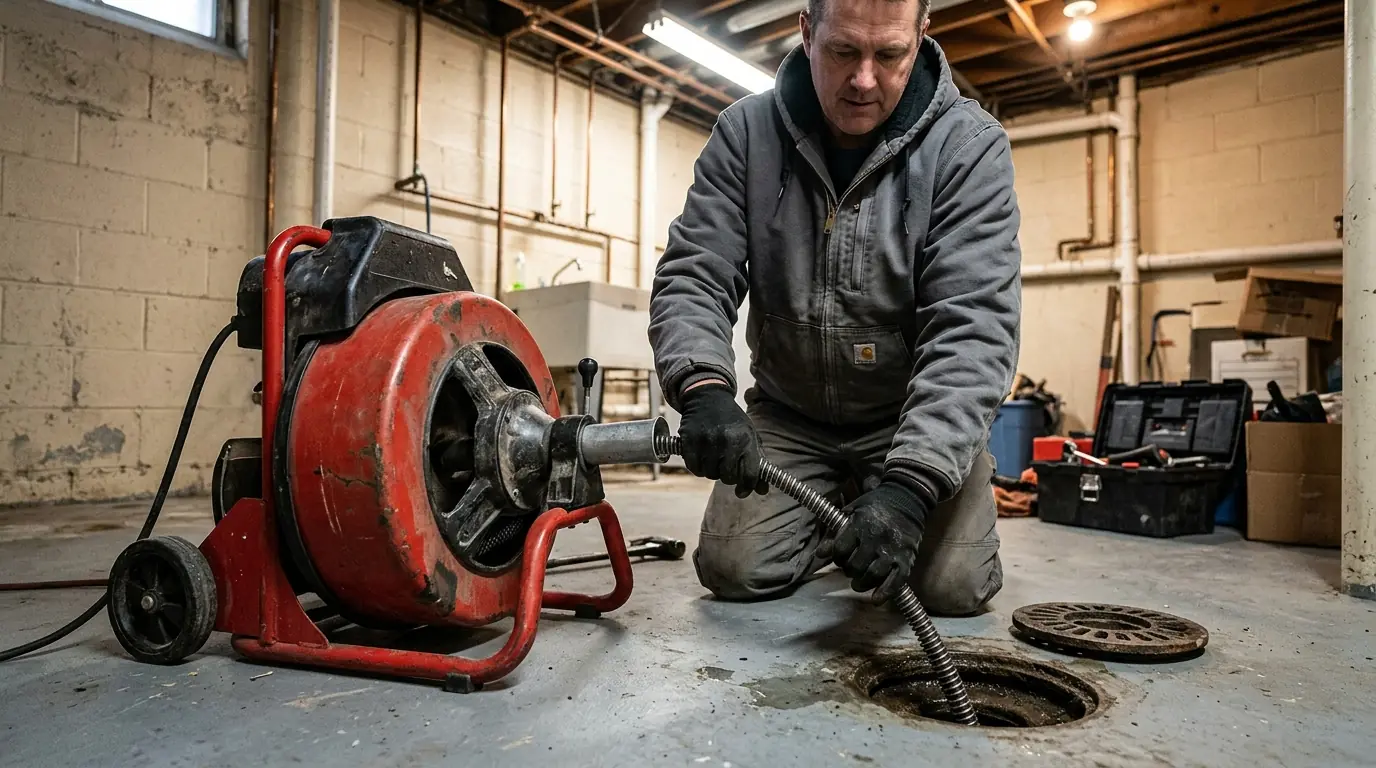
- Clearing the sewer lateral where backup is the cause
- Camera inspection to establish why the backup happened
- Assessing the sump system and discharge on groundwater cases
- Photographs and a written cause description for insurance
- A plain assessment of what prevents a repeat
What you get
What changes after the visit
The source gets identified before anything else
Supply, sewer, and groundwater need three different first moves.
Contaminated water is called what it is
Sewer backup is a health matter, and pretending otherwise helps nobody.
The plumbing cause is fixed, not just cleared
Clearing a backup restores drainage; finding why it happened prevents the repeat.
Sump and drainage assessed together
Groundwater flooding is a system problem rather than a single failure.
Documentation for the claim
Photographs and a written cause description support an insurance filing.
Handling it yourself against calling us
| Factor | Doing it yourself | Calling us |
|---|---|---|
| Identifying the source | Assuming a pipe burst | Supply, sewer, and groundwater told apart in the first minutes |
| Sewer backup | Continuing to use water upstairs | All water use stopped, then the lateral cleared |
| Supply failure | Searching for the shutoff during the flood | Guided to the main valve on the phone |
| Groundwater | Blaming the plumbing | Sump, discharge, and exterior drainage assessed |
| Contamination | Cleaning up sewage without protection | Called what it is, with remediation advised where warranted |
Denver rules and local conditions that apply
Denver homeowners own the sewer lateral to the city main, which is why a backup originating in the buried run is a property owner expense rather than a utility one.
Low lying ground along the South Platte through Globeville and Elyria Swansea, and areas of high water table near Marston Lake, are where groundwater flooding concentrates during spring melt.
Budgeting
What moves the price up or down
Which source it turns out to be
Clearing a lateral, repairing a supply line, and installing drainage are different orders of work.
Time of day
Basement floods rarely happen at convenient hours, and after hours dispatch costs more.
Whether camera work is needed
Sewer backups warrant it, because the cause determines whether it recurs.
Extent of the plumbing repair
Stabilising the property and permanently repairing it are frequently separate visits.
Drainage work required
Sump installation and exterior drainage are separate projects quoted on their own.
Why this crew
Why homeowners call us back
One point of accountability
The technician who diagnoses the problem stands behind the repair.
Built for Front Range conditions
Hard water, expansive clay, and a deep frost line shape every recommendation.
Priced before work starts
Written figures, no hourly surprises, and a straight answer on the cheaper path.
Old systems taken seriously
Prewar boilers, cast iron stacks, and clay laterals get repaired where repair is honest.
Common questions
Questions we field on this work
It depends on the source. Clean water arriving continuously means shut the main. Water at the floor drain with odor means stop using water upstairs immediately.
Yes. It is contaminated water and it warrants proper remediation rather than a mop and a bucket.
Because everything the house drains has to pass through the restricted lateral, and whatever cannot pass surfaces at the lowest drain.
Sudden plumbing discharge is commonly covered. Groundwater and sewer backup often need specific endorsements, so it is worth checking your policy.
It appears at the wall and floor joint, it tracks the weather rather than water use, and it stops when the melt does.
Yes. The line is answered 24 hours a day and backups are treated as urgent.
On a sewer backup, that depends on the cause, which is why a camera run follows the clearing rather than being optional.
If the source is groundwater, likely yes, alongside grading and downspout work. If it is a plumbing failure, a pump treats the symptom.
Usually where the supply enters the basement, near the water meter. It is worth finding and testing it before you need it.
Get the source identified before anything else
Supply, sewer, and groundwater need different first moves. We work out which you have.