Water Softener Installation in Denver, CO
Scale on every fixture and water heaters that never reach their rated life? Front Range water carries a mineral load that costs money quietly, through shortened equipment life and higher fuel use rather than through anything visible.
Quick answer
Is a water softener worth installing in Denver?
A water softener is worth installing in Denver where hardness measurably shortens water heater life and coats fixtures, which is common across the metro and most pronounced in the north toward Brighton. The return comes from equipment lasting closer to its rating rather than from anything visible at the tap.
Updated August 2026 by Colton Brackett, Lead Plumber
What this work actually covers
Hard water is dissolved calcium and magnesium picked up as water moves through rock, and Front Range supply carries a meaningful amount of both. The minerals are not a health concern. They are an equipment concern, and the cost shows up in places nobody connects back to the water.
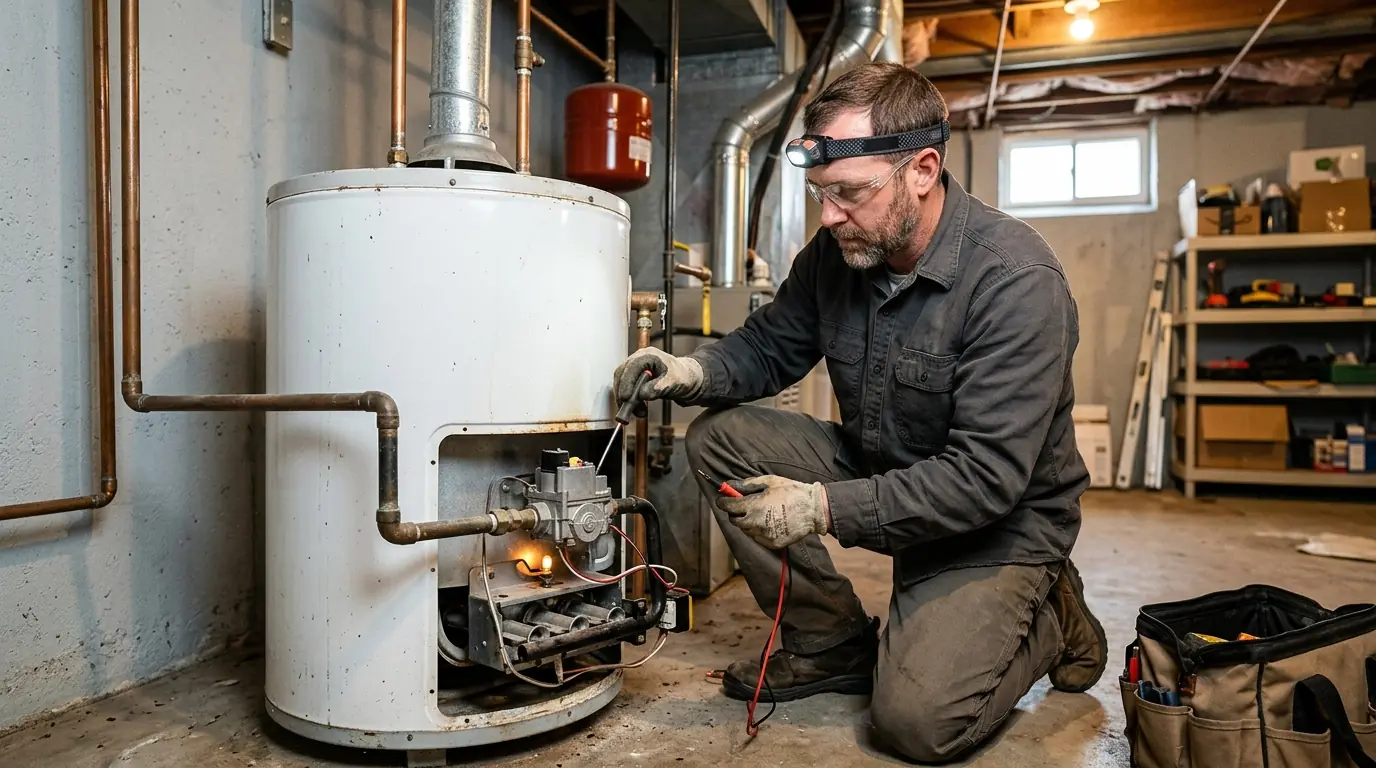
Inside a water heater, dissolved minerals drop out as the water heats and settle at the bottom of the tank as scale. That layer insulates the burner from the water above it, so the unit burns longer for the same output and the steel cooks from below. Tanks rated for twelve years commonly give out around year eight here.
A softener exchanges those minerals for sodium or potassium in a resin bed, then flushes the collected hardness away during regeneration. Whether it earns its cost depends on measured hardness and on how much equipment the household is protecting.
Budgeting
What moves the price up or down
Grain capacity required
Higher hardness and larger households need larger and more expensive units.
Control type
Metered regeneration costs more up front and less in salt over time.
Plumbing modifications
Where the incoming line enters determines how much pipework the installation needs.
Drain availability
A nearby drain with air gap capability keeps it simple; a long run adds work.
Ongoing salt cost
A real running expense that belongs in the comparison rather than the fine print.
Handling it yourself against calling us
| Factor | Doing it yourself | Calling us |
|---|---|---|
| Sizing | Buying whatever the box recommends | Grain capacity matched to tested hardness and real use |
| Regeneration | A timer that cycles regardless of use | Metered control regenerating on actual volume treated |
| Drain connection | A hose into a floor drain | Proper air gap preventing cross connection |
| Bypass | No way to run the house without the unit | Bypass valve fitted so service does not mean no water |
| What gets softened | Every line including irrigation | Exterior and irrigation left on hard supply where sensible |
What a softener installation covers
- Hardness testing on your actual supply
- Household water use estimated for correct grain capacity
- Unit selected and sized with the reasoning explained
- Bypass valve fitted so the house can run without it
- Drain connection made with a proper air gap
- Exterior taps and irrigation left on unsoftened supply
- Brine tank set up and initial regeneration run
- Salt type and maintenance interval explained in writing
The detail that matters
What actually goes wrong, and why here
Sizing a softener means matching grain capacity to hardness multiplied by daily household water use, and getting it wrong causes real problems in both directions. Undersized units regenerate constantly, wasting salt and water while delivering hard water between cycles. Oversized units sit for long periods without regenerating, which lets the resin bed foul.
Regeneration control is where the practical difference between units lies. Timer based systems regenerate on a schedule whether the resin needs it or not, wasting salt during low use weeks. Metered systems regenerate based on actual volume treated, which suits households whose use varies week to week and cuts salt consumption noticeably.
Installation detail decides whether it works properly. The unit needs a drain connection with an air gap, a bypass valve so the house can run unsoftened if the softener needs service, and consideration of which lines get treated. Most installations leave one exterior tap and often the kitchen cold on hard water, because there is no reason to soften irrigation or drinking water. That last point is where filtration and softening are frequently confused, since they solve entirely different problems.
Second water heater in a decade?
Front Range mineral content is usually why. A softener protects the next one rather than replacing the last.
Call (720) 698-9746Brands We Service
- Rheem
- A.O. Smith
- Bradford White
- Navien
- Rinnai
- Weil-McLain
- Burnham
- Moen
- Kohler
- Zoeller
What you get
What changes after the visit
Equipment reaches its rated life
Water heaters, dishwashers, and washing machines all last longer on softened water.
Scale stops accumulating in pipes
Existing deposits stay, but new buildup effectively stops.
Less detergent and soap needed
Softened water lathers with substantially less product.
Fixtures stay clean with less effort
No white crust reforming on every aerator and shower head.
Water heating costs drop slightly
A burner not fighting a scale layer runs shorter cycles.
Denver rules and local conditions that apply
Water softener drain connections require an air gap under Denver plumbing code to prevent cross connection between the drain and the potable supply.
Hardness varies across the metro rather than being uniform, and north metro properties toward Brighton and Commerce City commonly test higher than central Denver, which is why testing beats assuming.
What happens after you call
Your water gets tested
Actual hardness is measured rather than assumed from the city average.
Use is estimated and capacity chosen
Household size and fixture count set the grain capacity needed.
Installation point is planned
Where the supply enters decides routing, bypass, and which lines stay hard.
The unit is fitted with bypass and air gap
Drain connection, bypass valve, and brine tank all go in together.
Initial regeneration and handover
The first cycle is run and the salt and maintenance routine explained.
How long the work takes
A straightforward installation near the incoming supply generally takes three to five hours. Where the softener has to sit away from the entry point, additional pipework extends that.
The first regeneration cycle runs after installation and the system delivers softened water within a day. Hardness testing at the tap afterward confirms the unit is performing.
Warning signs
Signs the problem is already under way
White crust around faucet aerators and shower heads
Mineral deposits building at every point where water evaporates.
Spotting on glassware straight out of the dishwasher
Dissolved minerals left behind as the water dries.
Soap and detergent that will not lather
Hardness binds surfactants, so more product achieves less.
Water heaters failing well before their rating
Scale insulating the burner is the most expensive symptom of hard water.
Reduced flow at fixtures over the years
Mineral buildup gradually narrowing the bore of supply piping.
Stiff laundry and faded fabric
Minerals deposited in fibres during washing.
Water Softener Installation coverage by ZIP code
Why this crew
Why homeowners call us back
One point of accountability
The technician who diagnoses the problem stands behind the repair.
Built for Front Range conditions
Hard water, expansive clay, and a deep frost line shape every recommendation.
Priced before work starts
Written figures, no hourly surprises, and a straight answer on the cheaper path.
Old systems taken seriously
Prewar boilers, cast iron stacks, and clay laterals get repaired where repair is honest.
Common questions
Questions we field on this work
Hard enough to shorten water heater life measurably, and it varies by area. North metro toward Brighton tests higher than central Denver, which is why we test rather than assume.
No. Sodium is exchanged in small quantities and the water does not taste of salt. Potassium chloride is available where sodium is a concern.
Many installations leave the kitchen cold tap unsoftened. Softening addresses scale rather than drinking quality, which is a different system.
It depends on hardness and use. Metered regeneration units use noticeably less than timer based ones because they only cycle when needed.
No. It stops new buildup. Existing deposits in a water heater or pipes remain until they are cleared.
Yes, with an air gap. Regeneration flushes collected hardness away and that water has to go somewhere legal.
Commonly ten to fifteen years for the unit, with the resin bed being the component that eventually needs attention.
No. There is no benefit outdoors and it wastes salt and capacity, so exterior lines are usually left on hard supply.
That is arguably the best time. Protecting a new tank from year one is where most of the return sits.
Get hardness tested before buying anything
Real numbers, correct sizing, and an honest view of whether it pays.