Water Line Replacement in Denver, CO
Pressure falling across the whole house, or a soggy strip running from the street? The service line between meter and building is a single pipe with no backup, and in older Denver blocks it is frequently the original.
Quick answer
What is a water service line and when does it need replacing?
The water service line carries supply from the Denver Water meter into the building, and the property owner owns it from the meter onward. Replacement is warranted when pressure has dropped across the whole house, when a leak shows as wet ground along the run, or when the existing line is galvanized or lead.
Updated August 2026 by Colton Brackett, Lead Plumber
What this work actually covers
Everything in a house depends on one buried pipe running from the meter to the building, and unlike interior plumbing it cannot be isolated section by section. When it fails, the whole property is affected at once.
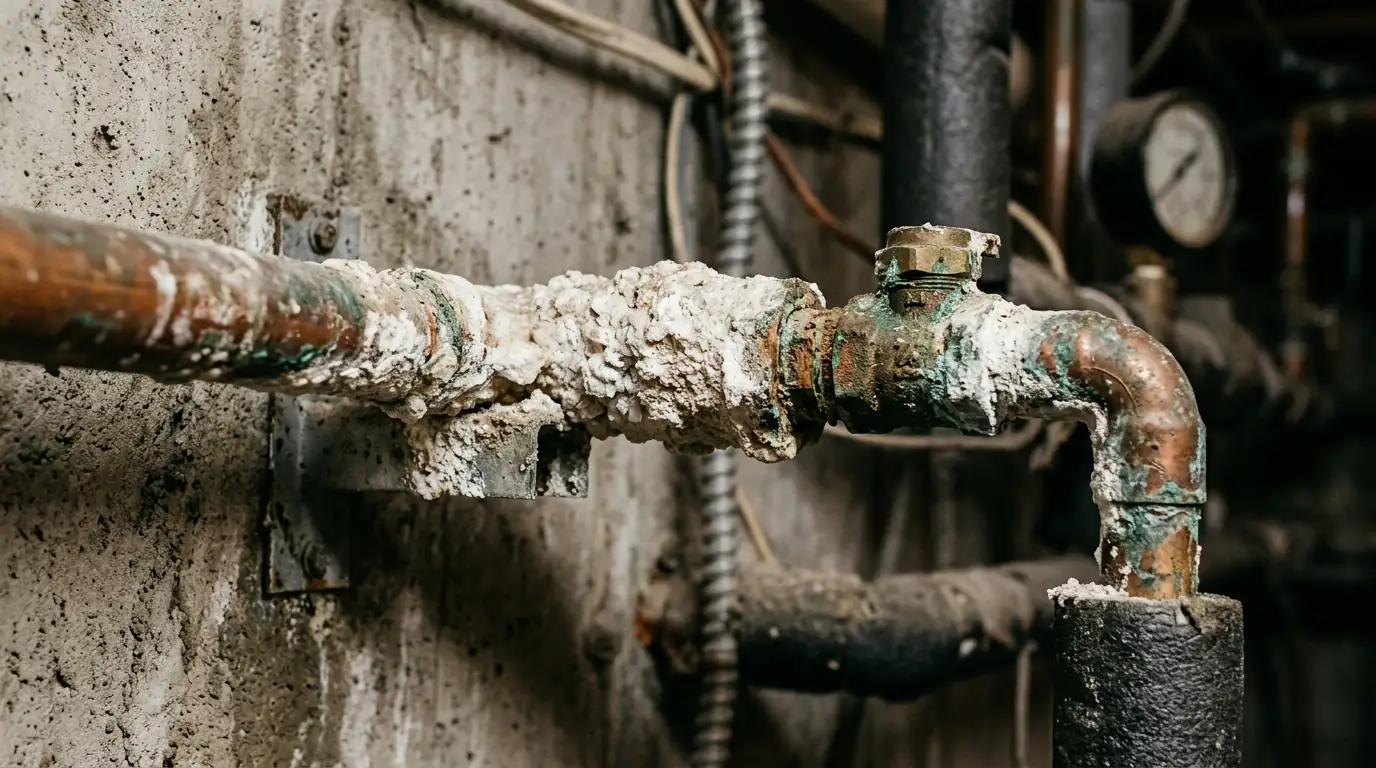
Three conditions drive replacement in Denver. Galvanized service lines corrode inward until flow at the house is a fraction of what the meter delivers. Lead lines, still present in a number of older blocks, are a water quality matter rather than a flow one. Physical failure from soil movement or freeze produces a leak that shows as persistently wet ground along the route.
Pressure diagnosis matters before anyone quotes. Low pressure at the house can come from the service line, from a failed pressure reducing valve, from corroded interior galvanized, or from the meter itself. Testing at the meter and at the house separates these, and replacing the wrong one is an expensive way to learn that.
Budgeting
What moves the price up or down
Distance from meter to building
Setback determines both pipe length and excavation volume.
Method viability
Trenchless costs more in equipment and usually far less in restoration.
Surface above the route
Driveways, patios, and mature trees are the main drivers of trenching cost.
Depth required
Frost depth sets a minimum and rock or utilities can force deeper work.
Right of way approval
Runs crossing public land carry approval beyond the standard plumbing permit.
Handling it yourself against calling us
| Factor | Doing it yourself | Calling us |
|---|---|---|
| Diagnosing low pressure | Assuming the service line is the cause | Meter and house pressure compared before quoting |
| Method | Trenching the full run by default | Trenchless assessed against soil, route, and crossings |
| Yard restoration | Rebuilding lawn and hardscape afterward | Two small pits where trenchless is viable |
| Depth | Reusing a shallow original route | New line set below Front Range frost depth |
| Permits and locates | Handled by the homeowner or skipped | Arranged, marked, and inspected as part of the job |
What a service line replacement covers
- Pressure testing at the meter and at the house to confirm the cause
- Route survey and assessment of trenchless viability
- Utility locates requested and confirmed before excavation
- Denver permit and right of way approval where the run crosses public land
- Excavation of pits or trench depending on method
- New service line installed below frost depth
- Connection at the meter and at the building inspected
- Backfill compacted and surface restored to grade
The detail that matters
What actually goes wrong, and why here
Trenchless replacement changes the economics on most Denver lots. Rather than trenching from meter to house, two small pits are excavated at each end and the new line is pulled through with a boring head or by splitting the old pipe outward. Driveways, mature planting, and established lawns survive, and the restoration cost that often exceeds the plumbing cost largely disappears.
It is not universal. Rock close to the surface, existing utilities crossing the route, and severe route bends can all rule it out, which is why the assessment matters before the method is promised. Utility locates are not a formality here: gas, electric, and communication lines commonly cross a service run at shallower depth.
Material selection has changed usefully. Copper remains a durable choice and is widely used. Polyethylene service pipe installs in continuous lengths with no joints along the run, which removes the joint failures that soil movement produces, and it tolerates the ground shifting that expansive Denver clay imposes. Either can be correct, and the choice belongs in the conversation rather than in the invoice.
Whole house pressure fading over the years?
If the meter delivers more than the house receives, the buried line between them is where it is going.
Call (720) 698-9746Brands We Service
- Rheem
- A.O. Smith
- Bradford White
- Navien
- Rinnai
- Weil-McLain
- Burnham
- Moen
- Kohler
- Zoeller
What you get
What changes after the visit
Whole house pressure is restored
New full bore pipe delivers what the meter is already supplying.
Lead lines are removed from the system
Replacement resolves a water quality concern permanently.
Trenchless keeps the yard intact
Where soil and route allow, boring avoids trenching the full run.
Permits and locates are handled
Denver approvals and utility marking are managed rather than left to you.
The connection is made properly
Meter side connection detail is inspected work rather than an improvisation.
Denver rules and local conditions that apply
Denver Water owns the main and the meter; the property owner owns the service line from the meter into the building. That boundary decides who pays, and it surprises most homeowners the first time it matters.
Front Range frost depth sets the minimum burial depth for a new service line, and work crossing the public right of way needs approval beyond the plumbing permit.
What happens after you call
Pressure is tested at both ends
Meter and house readings establish whether the service line is actually the problem.
The route is surveyed and located
Path, depth, crossings, and trenchless viability all get assessed.
Permits and utility locates complete
Denver approval and underground marking finish before any digging starts.
The new line is installed
Bored or trenched to method, set below frost depth, and connected at both ends.
Inspection, backfill, restoration
Connections are inspected, backfill compacted in lifts, surface returned to grade.
How long the work takes
A trenchless service line replacement on a typical Denver lot usually completes within one to two days. Full trenching across a long or obstructed run extends to three or more.
Permitting and utility locates generally add several days before the start date, and water service is interrupted only during the tie in rather than for the whole project.
Warning signs
Signs the problem is already under way
Pressure low at every fixture in the house
Whole property symptoms point upstream of the interior distribution.
A strip of ground that stays wet or green
Escaping supply water surfaces along the buried route.
Water use rising with no visible leak
Loss on the customer side of the meter still bills to you.
A known galvanized or lead service line
Both warrant replacement on their own merits regardless of current flow.
Pressure that improved after a meter test
A difference between meter and house pressure isolates the service line.
Recurring repairs on the same buried run
Multiple failures indicate the line has reached the end of its service life.
Why this crew
Why homeowners call us back
One point of accountability
The technician who diagnoses the problem stands behind the repair.
Built for Front Range conditions
Hard water, expansive clay, and a deep frost line shape every recommendation.
Priced before work starts
Written figures, no hourly surprises, and a straight answer on the cheaper path.
Old systems taken seriously
Prewar boilers, cast iron stacks, and clay laterals get repaired where repair is honest.
Common questions
Questions we field on this work
Pressure is compared at the meter and at the house. A large difference isolates the buried run rather than the interior plumbing.
Not necessarily. Trenchless installation uses two small pits where soil and route allow, which spares lawn and hardscape.
You do, from the meter into the building. The utility is responsible on the main side of the meter.
Copper or polyethylene depending on route and preference. Polyethylene runs jointless, which suits ground that moves.
Some older Denver blocks still do. It can be identified at the point of entry, and replacement resolves it permanently.
Only during the tie in, typically a few hours, rather than for the duration of the project.
No. Repiping replaces the distribution inside the house. This replaces the single buried line from the meter.
A single physical break on otherwise sound pipe can be repaired. Corroded galvanized and lead lines warrant replacement.
If the old line was restricted, yes, because the meter has been delivering more than the pipe could carry.
Confirm the cause before replacing anything
Pressure tested at both ends, then the method chosen on route and soil.