Repiping Services in Denver, CO
Third pinhole this year, or brown water at every hot tap? Repiping replaces the supply system rather than chasing failures through it. We stage the work so the house stays livable while it happens.
Quick answer
When does a Denver house actually need repiping?
A Denver house needs repiping when galvanized supply has corroded to the point of restricted flow and repeat pinholes, typically past sixty years of service. Two or more leaks within a couple of years on the same system, combined with discolored water and falling pressure, is the practical threshold rather than any fixed age.
Updated August 2026 by Colton Brackett, Lead Plumber
What this work actually covers
Repiping means replacing the water supply distribution inside a building: the lines running from the main shutoff out to every fixture. It does not usually include the drain system or the buried service line, both of which are separate projects with separate triggers.
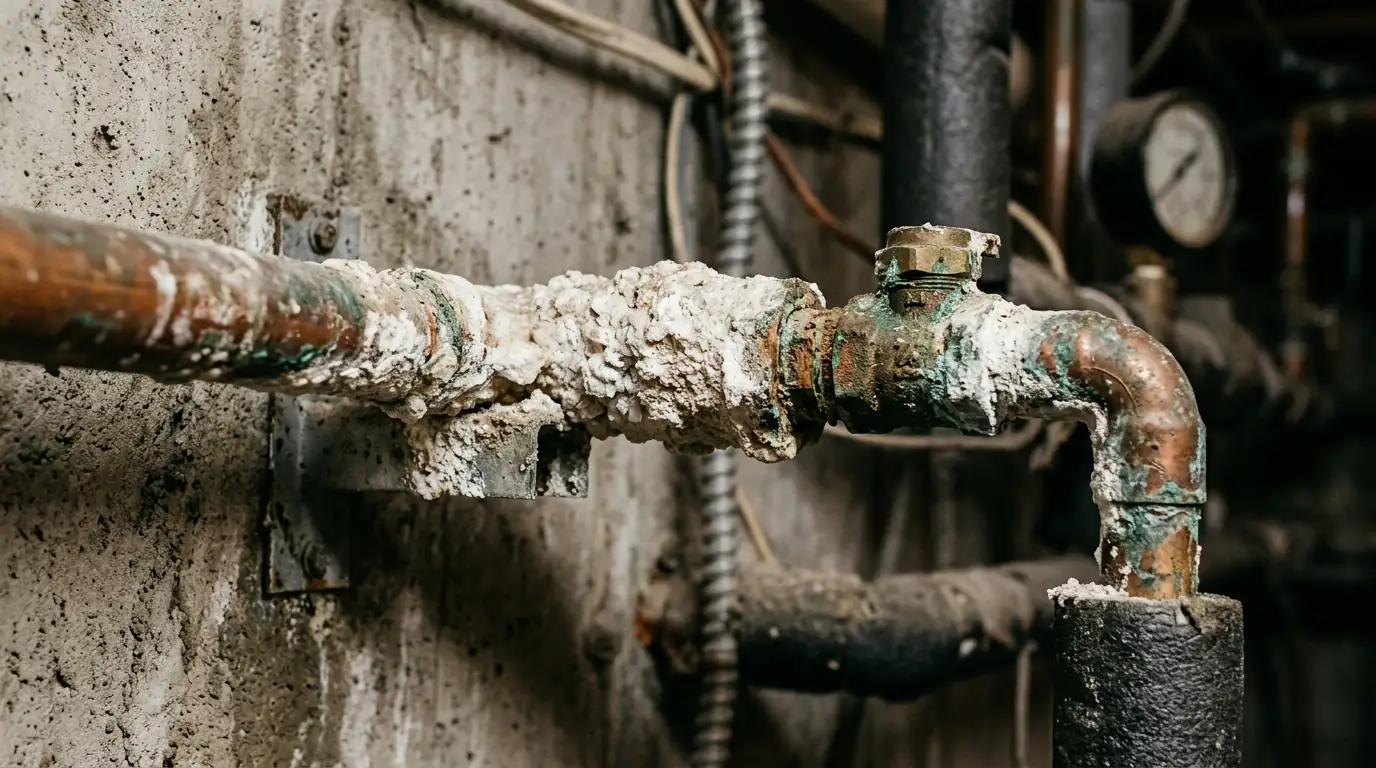
The reason it comes up so often in Denver is galvanized steel. Homes built before roughly 1960 across Capitol Hill, Park Hill, Berkeley, and Baker were plumbed in it, and galvanized corrodes from the inside. Rust builds inward, the bore narrows, flow drops, and eventually the thinnest section perforates under normal pressure.
The decision point is not age by itself. It is the combination of restricted flow, discolored water, and repeat failures. One pinhole is an event. Two in eighteen months is a pattern, and patching a pattern is how people spend replacement money in instalments without getting a replacement.
Budgeting
What moves the price up or down
Number of fixtures
Every sink, tub, shower, toilet, and appliance connection adds run length and terminations.
Access to the routing path
An unfinished basement makes it far cheaper than a slab house with finished ceilings.
Material selected
PEX generally costs less installed; copper carries a premium mostly in labor.
Wall and ceiling restoration
Patching is included; finish work such as texture and paint is usually separate.
Staging requirements
Keeping the house occupied through the work adds labor over a single pass.
Handling it yourself against calling us
| Factor | Doing it yourself | Calling us |
|---|---|---|
| Repeat pinholes | Patching each one as it appears | The system replaced so the failure mode ends |
| Water discoloration | A filter treating the symptom | Clean pipe removing the source |
| Material | Choosing on habit | PEX and copper compared on access, cost, and this house |
| Living in the house | Water off for the duration | Staged section by section so service is retained |
| Permits | Unpermitted work surfacing at resale | Pulled and inspected with a record you keep |
What a repiping project covers
- A walk through establishing fixture count and routing options
- Material comparison with the reasoning stated plainly
- A written scope covering access, restoration, and staging
- Denver permit pulled and inspection coordinated
- New supply distribution installed to every fixture
- Shutoff valves replaced at each fixture as part of the work
- System pressure tested before walls close
- Openings patched and left ready for finish restoration
The detail that matters
What actually goes wrong, and why here
Material choice is the first real decision and it is worth understanding rather than delegating. PEX is flexible, installs through existing cavities with far less demolition, tolerates freezing better than rigid pipe, and costs less in labor. Copper is rigid, requires more openings to install, handles high temperature better, and many owners simply prefer it. On a finished Denver house with plaster walls, PEX frequently wins on total cost because access is most of the expense.
Routing decides how disruptive the project feels. Running new lines through an unfinished basement ceiling and up interior partitions minimises the openings needed. Where a house has no basement or has finished ceilings throughout, more surface has to come off, and that difference explains why two similar houses receive quite different quotes.
Staging is what makes the project survivable while living there. Working bathroom by bathroom, with the kitchen kept live until its section is scheduled, means the household is never without water overnight. It costs slightly more in labor than gutting the system in one pass and it is almost always the right trade for an occupied house.
Second pinhole leak this year?
Two failures in a short window is a system telling you something rather than bad luck. A walk through puts a real number on the alternative.
Call (720) 698-9746Brands We Service
- Rheem
- A.O. Smith
- Bradford White
- Navien
- Rinnai
- Weil-McLain
- Burnham
- Moen
- Kohler
- Zoeller
What you get
What changes after the visit
Flow and pressure are genuinely restored
New full bore pipe returns performance that no amount of patching recovers.
Discoloration stops at the source
Clean water comes from clean pipe rather than from filtration compensating.
The leak cycle ends
Replacing the system removes the failure mode instead of resetting it.
Work is staged around the household
Sections are completed in sequence so water service is not lost for days.
Documented and inspected
Permitted work with an inspection record supports value at resale.
Denver rules and local conditions that apply
Denver requires a permit for supply replacement and inspects the work, which is worth having on record because unpermitted plumbing surfaces during resale inspections.
Pre-1960 housing across Capitol Hill, Baker, Park Hill, and Berkeley was plumbed in galvanized steel, which is why repiping is a routine project in those neighborhoods rather than an unusual one.
What happens after you call
A walk through establishes scope
Fixture count, existing material, and viable routing paths get recorded.
Materials and staging are agreed
You choose the material and the sequence with the tradeoffs explained.
Permit is pulled and work sequenced
Denver permitting completes before the first section opens.
Sections are replaced in order
Each area is completed and returned to service before the next begins.
Pressure test and inspection close it
The system is tested, inspected, and openings patched ready for finish.
How long the work takes
A typical two bathroom Denver house repipes in three to five working days. Larger homes, slab construction, and finished basements extend that, occasionally to two weeks.
Water service is retained through most of the project because sections are staged. Short planned shutoffs happen during tie ins and are scheduled with you rather than sprung on the household.
Warning signs
Signs the problem is already under way
Brown or rust tinted water at hot taps
Corrosion products flushing out of the pipe wall into the supply.
Pressure dropping when two fixtures run
A narrowed bore cannot carry simultaneous demand.
Repeat pinhole leaks in the same system
Wall loss is systemwide, so failures cluster once they begin.
Visible corrosion at exposed threaded joints
Threads are the thinnest section and they fail first.
Water that clears after running for a minute
Sediment settling in the pipe between uses and flushing out on demand.
A house built before 1960 with original supply
Galvanized past sixty years is well beyond its service expectation.
Why this crew
Why homeowners call us back
One point of accountability
The technician who diagnoses the problem stands behind the repair.
Built for Front Range conditions
Hard water, expansive clay, and a deep frost line shape every recommendation.
Priced before work starts
Written figures, no hourly surprises, and a straight answer on the cheaper path.
Old systems taken seriously
Prewar boilers, cast iron stacks, and clay laterals get repaired where repair is honest.
Common questions
Questions we field on this work
Repeat pinholes, discolored hot water, and pressure that collapses when two fixtures run. Any two of those on original galvanized is the practical threshold.
On a finished Denver house PEX usually wins because it installs with far fewer openings. Copper remains a sound choice where access is easy or where you prefer it.
Yes. Sections are staged so water service is retained, with short planned shutoffs during tie ins.
No. Drain replacement is separate work with its own triggers, though both are sometimes done together during a renovation.
Openings are needed at strategic points rather than throughout. Patching is included; texture and paint are usually separate.
Three to five days for a typical two bathroom house. Slab construction and finished basements extend it.
No, that is the water service line and it is quoted separately.
Noticeably, if the old pipe was restricted. Full bore pipe restores flow that corrosion had been taking gradually.
Documented repiping removes a known objection, and unpermitted or failing galvanized is a common negotiation point against sellers.
Get repiping scoped and priced properly
A walk through, honest material advice, and staging that keeps the house usable.