Gas Line Repair and Installation in Denver, CO
If you can smell gas, leave the building and call from outside. For everything else, adding an appliance or extending a line, the work starts with a load calculation across the whole house rather than at the new appliance alone.
Quick answer
What should I do if I smell gas in my Denver home?
Leave the building immediately without operating light switches, phones, or anything that could spark, then call from outside. Xcel Energy responds to suspected leaks at no charge and will shut the supply. Repair of the customer side piping follows once the supply is secured.
Updated August 2026 by Colton Brackett, Lead Plumber
What this work actually covers
Gas work divides into two categories with very different urgency. A suspected leak is an evacuate first situation, and the utility handles the initial response. Planned work, meaning adding a range, a dryer, a fire pit, or a garage heater, is scheduled work that begins with arithmetic.
That arithmetic is the part most often skipped. Every appliance draws a rated input, and the supply pipe has to deliver the total across the distance involved without pressure dropping below what the appliances need. Adding a high input tankless water heater to a line sized decades ago for a furnace and a range is how households end up with appliances that misbehave under simultaneous demand.
Altitude complicates it further in Denver. Combustion appliances rated at sea level deliver less at five thousand feet, and many require derating or a different orifice to burn correctly here.
Budgeting
What moves the price up or down
Distance from the meter
Longer developed lengths need larger diameter pipe and more labor.
Whether the existing supply is adequate
An undersized main run may need upgrading before the new appliance can be added.
Material selected
Black iron costs less in material and more in labor; flexible tubing reverses that.
Access through finished space
Running through finished walls and ceilings adds opening and patching work.
Permit and inspection fees
Denver charges these directly and they pass through at actual cost.
Handling it yourself against calling us
| Factor | Doing it yourself | Calling us |
|---|---|---|
| Adding an appliance | Connecting to the nearest available line | Whole house load calculated before anything is run |
| Pipe sizing | Matching the appliance connection size | Diameter set by load, length, and allowable pressure drop |
| Leak checking | Soapy water and a look | Isolated pressure test held on a gauge and documented |
| Flexible tubing | Installed without bonding | Bonded correctly, which is a safety requirement not a preference |
| Altitude | Sea level factory settings left in place | Derated and combustion verified for five thousand feet |
What gas line work covers
- Total connected load calculated across every appliance
- Developed length measured including fittings and rises
- Pipe material and diameter selected to the calculation
- Denver permit pulled and inspection coordinated
- Sediment trap and appliance shutoff fitted where required
- Bonding completed correctly where flexible tubing is used
- Full pressure test held and documented before gas is restored
- Appliance derated for altitude and combustion verified
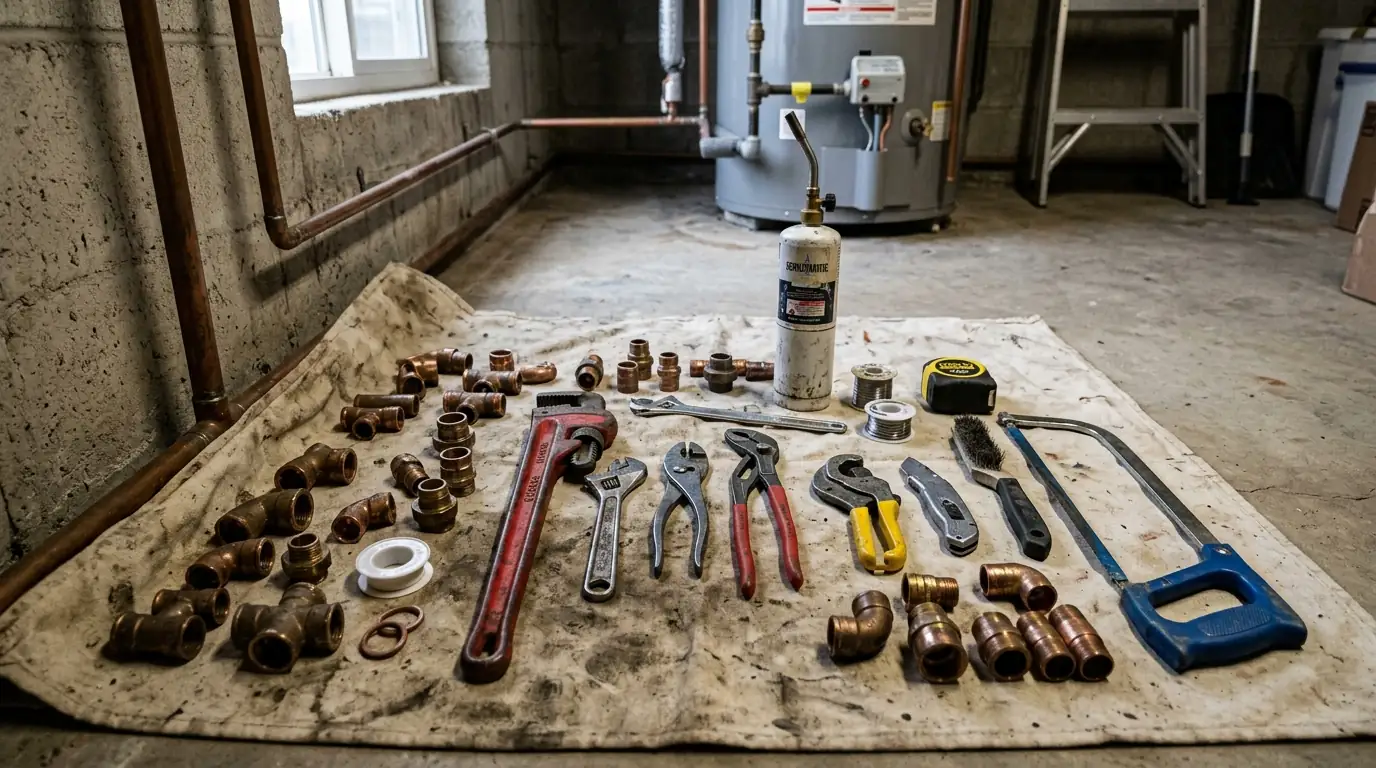
The detail that matters
What actually goes wrong, and why here
Pipe sizing is a calculation rather than a judgement, and it depends on three inputs: total connected load in BTU, the developed length of the run including fittings, and the allowable pressure drop. Undersizing does not usually announce itself at installation. It appears months later as a furnace that struggles when the water heater fires, which owners then attribute to the appliance.
Material choice matters for both safety and cost. Black iron pipe remains the standard for interior runs and is durable and rigid. Corrugated stainless steel tubing installs far faster through finished spaces and requires specific bonding to be safe, which is a detail that gets missed by installers unfamiliar with it. Underground work needs coated or polyethylene pipe rated for the purpose.
Pressure testing is the step that separates competent work from the alternative. A completed run is isolated and held under test pressure with a gauge for a defined period, and any drop means a leak that has to be found and corrected before gas is introduced. It is not optional and it is not something to take on trust, which is one reason Denver inspects this work.
Smell gas right now?
Leave the building without touching switches or phones, then call from outside. Do not investigate it yourself.
Call (720) 698-9746Brands We Service
- Rheem
- A.O. Smith
- Bradford White
- Navien
- Rinnai
- Weil-McLain
- Burnham
- Moen
- Kohler
- Zoeller
What you get
What changes after the visit
Load calculated across the whole house
Sizing reflects total demand rather than the new appliance in isolation.
Every run pressure tested
Testing is how a leak is found before the gas is restored rather than after.
Altitude derating applied
Appliances set up for five thousand feet burn correctly rather than richly.
Permitted and inspected
Denver permits gas work, and the record matters at resale.
Sediment traps and shutoffs fitted
Code required details that protect the appliance and make service safe.
Denver rules and local conditions that apply
Xcel Energy owns the service and the meter and responds to suspected leaks at no charge. Customer side piping from the meter into the building is the property owner's responsibility.
Denver permits and inspects gas piping, and appliances installed above five thousand feet frequently need derating or an orifice change to burn correctly at altitude.
What happens after you call
The full appliance load is calculated
Existing and planned appliances are totalled before any pipe is specified.
Route and material are selected
Developed length and access decide diameter and whether iron or flexible tubing suits.
Permit is pulled before work begins
Denver permits gas work and schedules inspection as part of it.
The run is installed and pressure tested
Test pressure is held on a gauge and any drop is found before gas returns.
Appliances connected and combustion checked
Derating for altitude and flame verification close the job out.
How long the work takes
A straightforward appliance connection from an adequately sized nearby line generally takes half a day. Runs requiring new pipe from the meter through finished space take one to two days.
Permit and inspection scheduling runs alongside the work. Gas is not restored to a new run until the pressure test has held and the inspection is satisfied.
Warning signs
Signs the problem is already under way
A sulphur or rotten egg smell
The odorant added to natural gas, and the signal to leave and call from outside.
Hissing near a gas line or appliance
Audible escape, which warrants immediate evacuation rather than investigation.
Dead vegetation in a line along the yard
An underground leak killing plant roots above the run.
Appliances underperforming when several run
Insufficient supply capacity for combined load rather than faulty appliances.
Soot or yellow flames on a burner
Incomplete combustion, which needs attention for safety rather than efficiency.
A new high input appliance planned
Load calculation should precede purchase rather than follow installation.
Gas Line Repair and Installation coverage by ZIP code
Why this crew
Why homeowners call us back
One point of accountability
The technician who diagnoses the problem stands behind the repair.
Built for Front Range conditions
Hard water, expansive clay, and a deep frost line shape every recommendation.
Priced before work starts
Written figures, no hourly surprises, and a straight answer on the cheaper path.
Old systems taken seriously
Prewar boilers, cast iron stacks, and clay laterals get repaired where repair is honest.
Common questions
Questions we field on this work
Leave the building without touching switches or phones, then call from outside. The utility responds to suspected leaks at no charge.
Yes. Denver permits and inspects gas work, and the record matters when you sell.
Frequently an undersized supply line. Combined load exceeds what the pipe can deliver at adequate pressure.
Yes, where it is installed and bonded correctly. Bonding is a safety requirement rather than a preference.
Combustion appliances rated at sea level deliver less at five thousand feet and often need adjustment to burn correctly here.
Yes, using pipe rated for underground use and with the same load calculation and pressure test.
The run is isolated and held under test pressure on a gauge. A pressure drop confirms a leak, then it is located and corrected.
Neither is universally better. Iron suits accessible runs; flexible tubing suits routing through finished space.
Yes, and that load calculation is frequently the deciding factor in whether a tankless unit is viable.
Get the load calculated before the appliance arrives
Correct sizing, a documented pressure test, and altitude set up.