Sewer Line Replacement in Denver, CO
Told the whole lateral needs replacing, and unsure whether that is true? Full replacement is the right answer on collapsed clay and deformed Orangeburg, and the wrong one on a line with two bad joints. The camera decides which you have.
Quick answer
When does a Denver sewer line actually need full replacement?
Full sewer line replacement is warranted in Denver when the lateral shows defects along most of its length, when Orangeburg pipe has deformed, or when a section has collapsed and the surrounding pipe lacks the wall strength to host a liner. Isolated defects on otherwise sound clay call for a spot repair instead.
Updated August 2026 by Colton Brackett, Lead Plumber
What this work actually covers
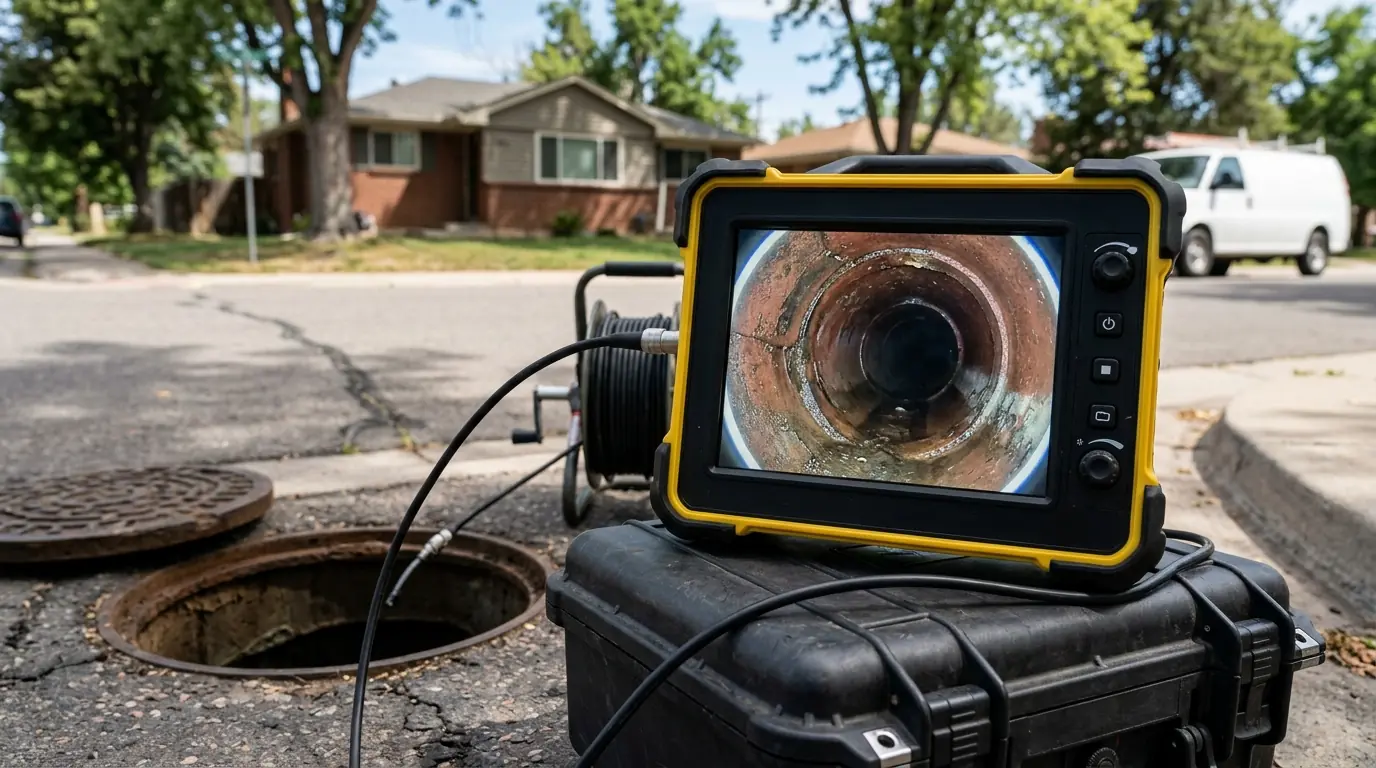
Replacement is the largest plumbing project most Denver homeowners ever face, so the first responsibility is establishing that it is genuinely necessary. A camera run with a locator shows every defect along the lateral, and the pattern of those defects is what separates replacement from repair.
Three findings point clearly toward replacement. Orangeburg pipe that has gone oval under soil load cannot host a liner or accept a patch. Clay with failures distributed along its whole length gives no sound host pipe to work from. A collapse with soil already migrating into the bore means the surrounding ground has lost support.
Everything else deserves a second look. A single failed joint on a hundred year old clay line that is otherwise intact is a spot repair, and quoting a full replacement on that finding is the most common overcharge in this trade.
Budgeting
What moves the price up or down
Depth of the run
The strongest single cost driver, because volume and shoring both scale with it.
Length to the city main
Lot depth and setback determine how much pipe and excavation the project needs.
Surface above the line
Driveways, patios, and mature trees add removal and restoration work.
Method selected
Pipe bursting reduces restoration cost but is not viable on every line.
Permits and right of way
Work under the street carries additional approval beyond the plumbing permit.
Handling it yourself against calling us
| Factor | Doing it yourself | Calling us |
|---|---|---|
| Deciding on replacement | Accepting a verbal assessment | Camera survey showing every defect on the run |
| Method | Trenching by default | Pipe bursting considered where the old line allows it |
| Grade | Reusing the old bedding | New pipe laid to consistent fall on proper bedding |
| Permits and locates | Skipped or handled by the homeowner | Pulled, marked, and inspected as part of the project |
| Restoration | Loose backfill that settles over a year | Compacted in lifts and restored to grade |
What a replacement project covers
- Full camera survey with defects located and marked
- A written scope comparing replacement against lining
- Denver plumbing permit and right of way approval where needed
- Utility locates requested and confirmed before excavation
- Excavation with shoring appropriate to the depth
- New pipe installed to correct grade on proper bedding
- Connection to the city main and to the building drain
- Compacted backfill and surface restoration to grade
The detail that matters
What actually goes wrong, and why here
The two methods differ mainly in how much of the yard survives. Open trench excavation exposes the full run, which gives complete visibility and allows grade to be corrected precisely, but it removes everything above the line. Pipe bursting pulls a new pipe through the old one from access pits at each end, which spares most of the surface but requires the old line to be in a condition that allows it.
Grade is the technical detail that decides long term performance. A lateral needs consistent fall toward the main, and the sags that plague older Denver laterals often came from poor bedding rather than from pipe failure. Replacement is the opportunity to correct that, and it is why bedding material and compaction matter as much as the pipe itself.
Depth drives the budget more than length does. Denver laterals commonly sit six to twelve feet down, and every additional foot increases both excavation volume and shoring requirements. That is why two houses on the same block can receive quotes that differ substantially for what looks like identical work.
Quoted a full replacement without seeing footage?
Ask for the camera recording before agreeing to anything. The pattern of defects is what separates a repair from a replacement.
Call (720) 698-9746Brands We Service
- Rheem
- A.O. Smith
- Bradford White
- Navien
- Rinnai
- Weil-McLain
- Burnham
- Moen
- Kohler
- Zoeller
What you get
What changes after the visit
Replacement is proven necessary first
Camera evidence, not a verbal assessment, drives the recommendation.
Modern pipe with sealed joints
PVC installed to grade removes the joint failures that ended the old line.
Permits and locates handled
Denver permitting, right of way approval, and utility marking are managed for you.
Trenchless considered where viable
Pipe bursting avoids full trenching on runs that allow it.
Surface restored to grade
Backfill is compacted properly so the yard does not settle over the following year.
Denver rules and local conditions that apply
Denver assigns lateral ownership to the property owner all the way to the city main, so replacement is a homeowner project including the section beneath the street and sidewalk.
Work within the public right of way requires approval beyond the standard plumbing permit, and the inspection covers grade, bedding, material, and connection detail.
What happens after you call
The full run is surveyed on camera
Every defect is recorded and located so the scope reflects the real condition.
You receive scope and alternatives in writing
Replacement, lining, and repair each priced with the reasoning stated plainly.
Permits and locates are arranged
Denver approvals and underground utility marking complete before excavation starts.
The line is replaced to correct grade
New pipe on proper bedding, joined to the main and the building drain.
Inspection, backfill, and restoration
The work is inspected, backfill compacted in lifts, and the surface returned to grade.
How long the work takes
A typical residential lateral replacement runs two to four days on site depending on depth, length, and what sits above the run. Pipe bursting on a suitable line is often shorter because there is far less excavation.
Permitting and utility locates generally add several days ahead of the start date. Where the household needs drainage in the interim, clearing can hold the line until work begins.
Warning signs
Signs the problem is already under way
Camera cannot pass along the run
An obstruction the camera will not clear frequently indicates collapse rather than blockage.
Pipe shows as oval on screen
Deformation is the signature of Orangeburg failing under load.
Defects appear at multiple points
Distributed failure removes the sound host pipe that repair and lining depend on.
Soil visible inside the pipe
Ground entering the bore means the pipe is no longer holding its surroundings.
Sinkholes or depressions along the run
Surface settlement indicates a void where soil has migrated into the line.
Backups resuming days after clearing
Extremely short intervals suggest the line no longer carries flow at all.
Why this crew
Why homeowners call us back
One point of accountability
The technician who diagnoses the problem stands behind the repair.
Built for Front Range conditions
Hard water, expansive clay, and a deep frost line shape every recommendation.
Priced before work starts
Written figures, no hourly surprises, and a straight answer on the cheaper path.
Old systems taken seriously
Prewar boilers, cast iron stacks, and clay laterals get repaired where repair is honest.
Common questions
Questions we field on this work
Ask to see the camera footage. Distributed defects, deformed Orangeburg, or a collapse justify it. A single bad joint does not.
Two to four days for open trench work at typical depth. Pipe bursting reduces that considerably where the old line permits it.
Not always. It reduces restoration cost but carries higher equipment cost, so on a short shallow run trenching sometimes wins.
PVC to current Denver standard, with sealed joints that remove the failure mode that ended the clay line.
No. The lateral belongs to the property owner to the main, including under the street.
Not throughout, though access to the building drain connection and the cleanout is needed at several points.
Yes, when the camera shows the rest is sound. That is a repair rather than a replacement, and it costs far less.
It gets cut and restored, which is a real cost. Pipe bursting is worth pricing specifically in that situation.
Modern PVC on proper bedding should outlast the household, provided grade was established correctly during installation.
Get replacement priced against the alternatives
Camera evidence, honest scope, and permits handled from start to inspection.