Burst Pipe in Denver: What to Do First
A supply line has split and water is going somewhere it should not. The next ten minutes matter more than the next ten hours, and almost none of what matters requires any plumbing knowledge.
Quick answer
What is the first thing to do when a pipe bursts?
Close the main water shutoff, usually where the supply enters the basement near the meter, within the first minute. A half inch line at household pressure releases several gallons every minute it stays open, so the time between noticing and closing that valve is the single largest factor in what this costs.
By Colton Brackett, Lead Plumber · Reviewed by Shane Pettigrew, Service Manager · Updated August 2026
Close the main shutoff before anything else
Find the main valve and close it. In most Denver houses it sits on the wall where the supply enters the basement, close to the water meter, and it turns clockwise. If it is a lever style valve, a quarter turn closes it.
This comes before photographs, before moving furniture, and before calling anyone. Water leaving a split half inch line under normal household pressure arrives at several gallons a minute, and it does not slow down while you decide what to do next.
If the valve will not turn, do not force it hard enough to snap the stem. Older multi turn valves seize, and a broken valve stem in the open position is a worse problem than the leak. Move to the street side shutoff or call and describe what you are seeing.
Deal with electricity before you deal with water
Standing water and live circuits are the part of this that can actually hurt someone. If water has reached outlets, a panel, or anything plugged in at floor level, cut power to that area at the breaker before walking through it.
If reaching the panel means crossing the water, do not. That is the point at which you stay out of the space and wait, and it is worth saying plainly rather than assuming everyone knows.
Open taps to drain the system down
With the main closed, open the lowest faucets in the house, including any basement or outdoor taps. That drains the pressure and the standing water still sitting in the pipes, which stops it continuing to arrive at the split.
It also tells you something useful. If water keeps running from the break long after the taps stop, the leak may be on the street side of the meter rather than yours, which changes who is responsible for it.
Take photographs before you clean up
Insurance adjusters ask for evidence of what happened, and the wet floor is the evidence. A handful of photographs showing the water, the affected rooms, and the pipe itself costs nothing and takes a minute.
Most policies cover the damage caused by sudden discharge while excluding the failed pipe itself. That distinction is worth knowing before you start a claim, because it shapes what you are actually asking for.
Water still coming through right now?
Close the main valve at the meter, keep everyone clear of standing water near electrical circuits, then call. The line is answered 24 hours a day.
Call (720) 698-9746Stopping the next one before it happens
Prevention on a Denver house is unglamorous and it works. Disconnect every hose before the first hard freeze, because a hose bib with a hose attached is the most reliable freeze point on the property and costs nothing to address.
Insulate any supply run passing through a crawl space, a garage ceiling, or an exterior wall. Insulation does not add heat, so it delays freezing rather than preventing it, but on a city that swings across freezing repeatedly rather than staying cold, delay is usually enough.
Find your main shutoff now and turn it once. Valves seize in whatever position they have sat in for a decade, and discovering that during a flood is the worst possible moment. If it will not move freely, replacing it is a small planned job rather than an emergency one.
What the repair itself involves
A technician isolates the affected section first, so the rest of the house keeps water while the diagnosis runs. That matters more than it sounds on a house with one bathroom.
Locating the break comes next, using moisture meters and pressure isolation rather than exploratory demolition. On copper or PEX in an accessible basement the whole visit usually runs one to three hours. Inside a finished wall, access is most of the work.
The pipe material then decides the conversation. A single freeze split on sound copper is a section replacement and the story ends there. A corrosion rupture on eighty year old galvanized is information about the rest of the system, and an honest technician will say so rather than patching quietly and waiting for the next call.
What Denver does to pipes that other cities do not
Denver rarely just stays cold. The city swings thirty or forty degrees inside a single day through winter, so water in an uninsulated crawl space or an exterior wall expands and contracts repeatedly rather than freezing once and thawing once.
That repetition is what splits copper along the seam. Most burst pipe calls here follow a whole season of that stress rather than one record cold night, which is why the calls cluster in the afternoon after a freeze rather than during it.
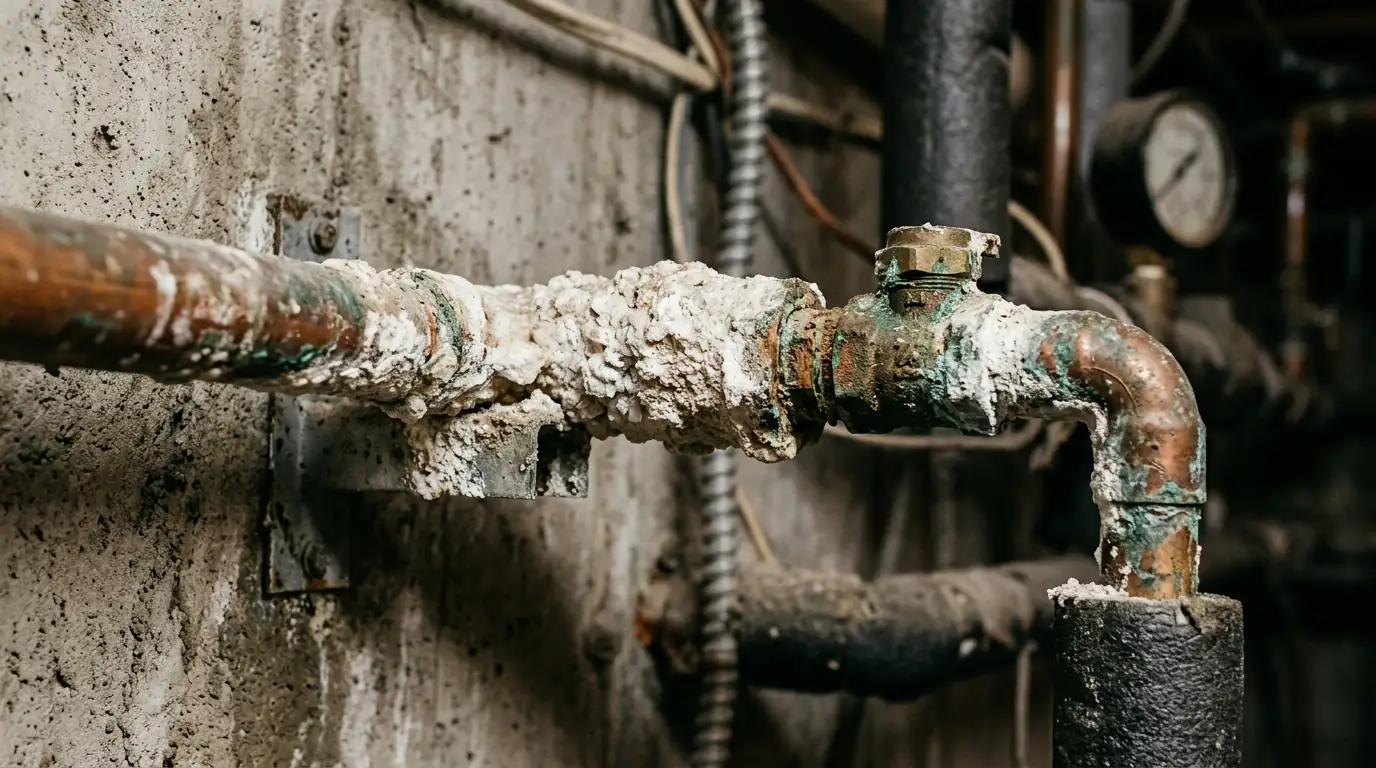
The other factor is age. Galvanized supply in prewar housing corrodes from the inside, narrowing the bore until the thinnest section fails under ordinary pressure. One pinhole in galvanized is rarely an isolated event, and that is worth understanding before paying for a spot repair.
What to leave for the plumber
Do not open walls looking for the break. Water travels along joists and pools where the structure lets it, so the visible stain frequently sits several feet from the actual split. Opening drywall at the stain is how people end up with three holes and an unsolved problem.
Do not run a heat gun or torch near old framing to thaw a suspected ice plug either. Rapid heating flashes trapped ice to steam faster than it can escape through a partially blocked line, and steam pressure has burst pipes that survived the freeze intact.
Locating a break properly uses moisture meters and pressure isolation rather than demolition, which is covered on the leak detection page. The repair itself follows on the burst pipe page.
Common questions
Questions people ask during a burst pipe
Usually on the wall where the supply enters the basement, near the water meter. It is worth finding and testing it before you need it rather than during.
On sound copper with a single defect, a clamp buys time. On corroded galvanized it buys weeks, because the neighbouring pipe has the same wall loss.
Sudden discharge damage is commonly covered while the failed pipe often is not. Photographs and a written cause description are what most adjusters ask for.
The split usually forms while the line is frozen but stays sealed by ice. Water arrives at the hole once it thaws.
Keeping the house warm helps, and opening cabinet doors under sinks against exterior walls lets warm air reach the pipe. Both are worth doing before a cold snap.
Get a technician routed to you now
Describe what you are seeing and a truck gets moving while you stay on the line.