Frozen Pipes in Denver: Prevention and Thawing
One dead tap while everything else runs normally is an ice plug. The pipe behind it may already be split, and the water will arrive when it thaws rather than while it is frozen.
Quick answer
What should I do about a frozen pipe?
Open the affected faucet first so expanding meltwater has somewhere to go, then apply gentle warmth from the fixture end toward the frozen section. Never use an open flame. A Denver pipe that froze has often already split, so the line should be checked before full pressure returns.
By Colton Brackett, Lead Plumber · Reviewed by Shane Pettigrew, Service Manager · Updated August 2026
Why the split is rarely where the ice is
An ice plug forming inside a pipe pushes the remaining liquid water ahead of it. Where that water is trapped between the plug and a closed faucet, it has nowhere to expand into, and pressure builds in that column until the weakest point of the pipe wall yields.
That point is frequently several feet from the ice. It explains why thawing the visible frozen section sometimes reveals a leak somewhere else entirely, and why heating a random run is not a strategy.
It also explains the timing of the calls. The pipe usually splits while frozen and releases nothing, because ice is still sealing the opening. Water arrives at the hole once the line thaws, which is why the phone rings hardest the afternoon after a cold snap rather than during it.
Reading which pipe is affected
One dead fixture with everything else working normally means the plug sits in the branch line serving that fixture. That is diagnostic, and it narrows the search considerably before anything is opened.
No water anywhere in the house is a different situation. That points at the main service line or a valve rather than a branch, and it needs looking at rather than heating blindly.
Reduced flow rather than none means a partial plug still forming. Acting at that stage is considerably easier than acting after it closes completely.
Thawing without causing the flood
Open the affected tap before applying any heat. That gives expanding meltwater an escape route and relieves the pressure that would otherwise build behind the thaw.
Work from the fixture end toward the plug rather than the other way. Meltwater then escapes ahead of the thaw instead of accumulating behind it against solid ice.
Never use a torch or open flame. Dry framing and blown insulation in older Denver houses ignite readily, and rapid heating also flashes trapped ice to steam faster than it can escape through a partly blocked line. Steam pressure has burst pipes that survived the freeze intact.
Where Denver houses actually freeze
Hose bibs with hoses still attached are the most common freeze point in the city and the easiest to prevent. Water trapped in the bib and hose has nowhere to drain, and the bib splits.
Uninsulated crawl space runs come next, followed by garage ceilings and any supply routed through an exterior wall. Older housing frequently ran pipe through exterior walls before insulation practice changed, and those runs freeze predictably rather than occasionally.
Evaporative cooler supply lines belong on the list too. They run fully exposed to a roof mounted unit, and one left charged over winter splits at the first hard freeze.
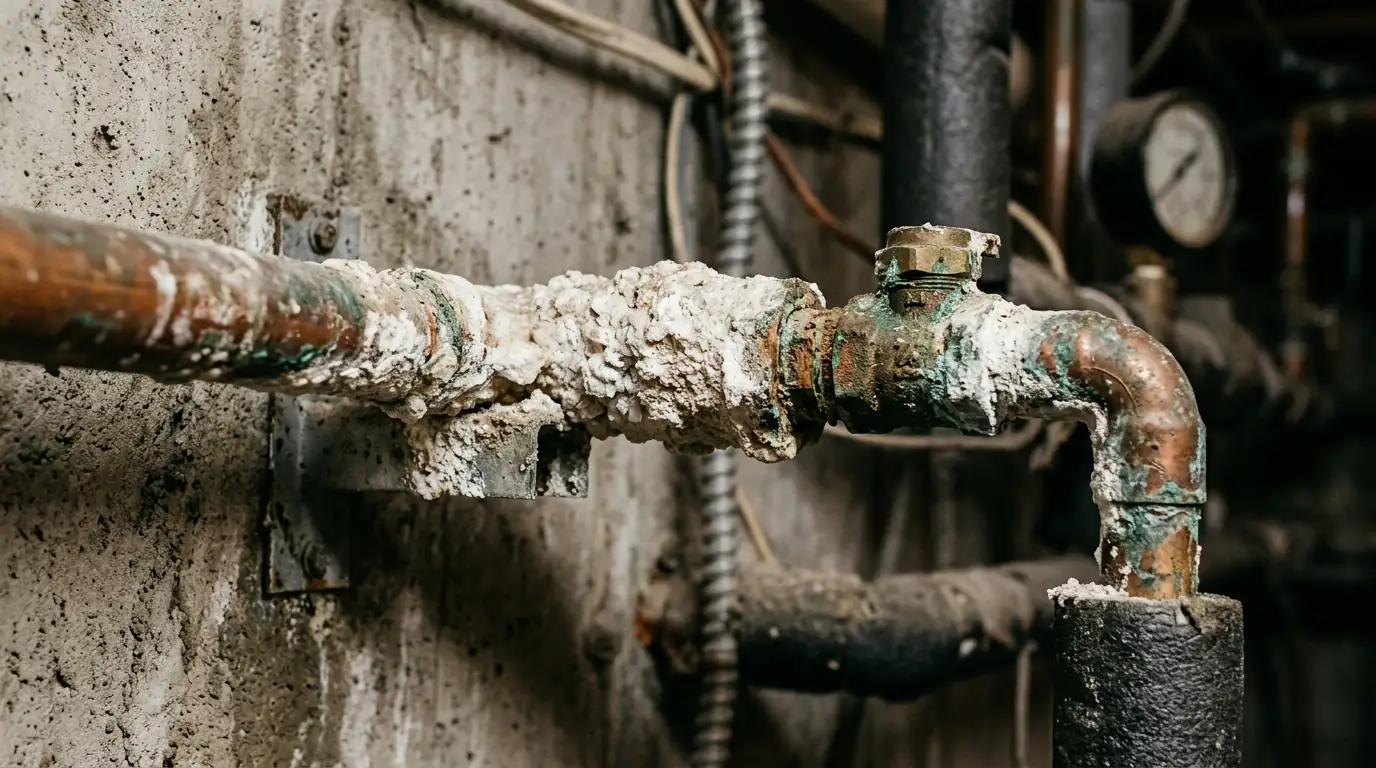
Dead tap this morning after a hard freeze?
Open the fixture to relieve pressure and call before applying heat. The pipe behind the ice may already be split.
Call (720) 698-9746Prevention that actually works here
Disconnect every hose before the first hard freeze. It costs nothing and it removes the single most common failure.
Insulate exposed runs, understanding what insulation does. It slows heat loss rather than adding heat, so on a genuinely cold run it delays freezing rather than preventing it. On a city that crosses freezing repeatedly rather than staying deeply cold, delay is usually sufficient.
Open cabinet doors under sinks on exterior walls during a cold stretch, and let a vulnerable tap drip. Moving water is far harder to freeze than standing water, and both measures cost almost nothing.
What a hard freeze does to outdoor plumbing
Hose bibs are the first casualty and the easiest to protect. Water sitting in the bib and an attached hose cannot drain, so it freezes and splits the valve body.
Frost free bibs help by placing the seat further inside the heated envelope, but they only work if the hose is disconnected. With a hose attached, a frost free bib freezes much like any other.
Irrigation is on the same clock. Front Range frost reaches deep enough to freeze water left in lateral lines and the above ground backflow assembly, and that assembly cracks rather than flexes.
What it costs to get this wrong
A split supply line inside a finished wall is not an expensive repair in materials. The expense is access, drying, and reinstating the surface, and those scale with how long the water ran before anyone noticed.
That is the argument for finding your main shutoff before winter and turning it once to confirm it moves. Two minutes of preparation is the difference between stopping a flood quickly and searching for a valve while water spreads.
It is also the argument for not leaving a house unheated while away in winter. Setting the thermostat low rather than off costs a little and prevents the scenario entirely.
When the fix is rerouting rather than thawing
A pipe that freezes once in a record winter is unlucky. A pipe that freezes every January is telling you about its routing, and thawing it annually is treating a symptom that will keep returning.
Heat cable helps on an accessible run, though it needs power and it fails eventually. It is a reasonable measure and a poor permanent answer.
Rerouting the run into conditioned space removes the failure mode entirely. On a pipe with a repeat history it frequently costs less over a few years than the annual thawing plus the eventual split repair.
What to check once it thaws
Restore pressure gradually and watch the thawed section while the water is still easy to shut off. A split reveals itself immediately at that point, which is far better than discovering it through a ceiling an hour later.
Check the neighbouring runs at the same exposure. A pipe that froze rarely froze alone, and the ones that did not fail this time are on the same trajectory.
Then work out why that section froze. Thawing restores service; identifying the cause is what stops the same call arriving next winter, and it is covered on the thawing page.
Common questions
Questions about frozen pipes
Gentle warmth from a hair dryer or space heater at the fixture end is reasonable. Open the tap first, and never use a torch.
One to two hours for an accessible run. Pipes inside exterior walls take longer because heat has to travel through the structure.
On known vulnerable runs during cold stretches, yes. It is not necessary across the whole house or the whole season.
It delays it. Insulation slows heat loss but does not add heat, so on a genuinely cold run it buys time rather than immunity.
The split formed while frozen and stayed sealed by ice. Water arrived at the hole once the line thawed.
Get it thawed without a flood following
Controlled thawing, the line checked before pressure returns, and the cause identified.